Shared ancestry
Polar and brown bears remain close relatives and can still produce fertile hybrid offspring.
 POLAR NORTH
LIFE AT THE EDGE OF THE ARCTIC
Meet Ursus maritimus — the polar bear. Follow its journey from ancient brown-bear ancestors to one of the Arctic's most remarkable marine hunters.
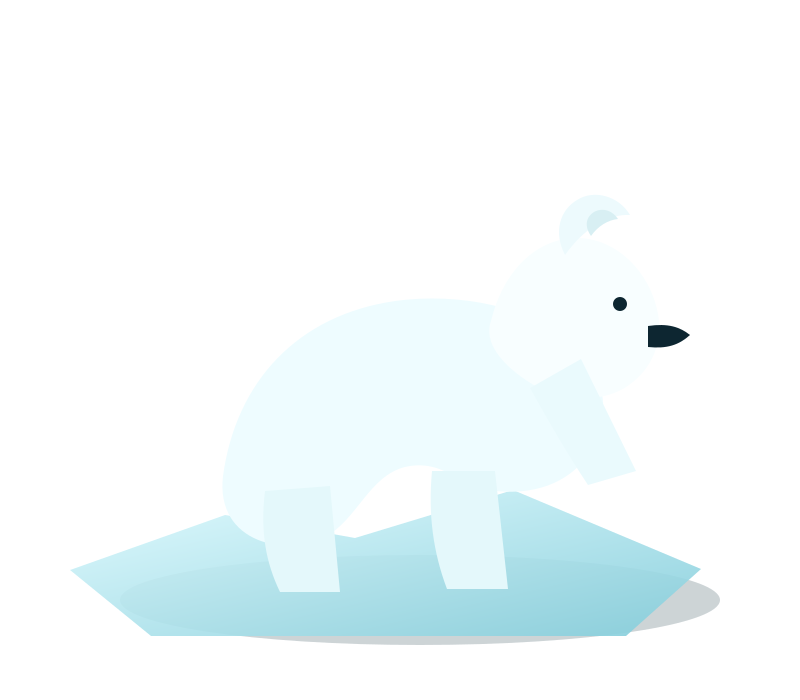
ORIGIN & EVOLUTION
Polar bears evolved from brown-bear ancestors as populations adapted to icy northern coastlines and a marine diet. Over many generations, traits favoring swimming, insulation and hunting on sea ice became increasingly important.
Polar and brown bears remain close relatives and can still produce fertile hybrid offspring.
Access to sea ice opened a rich hunting niche where seals provided energy-dense food.
Large paws, dense fur, thick fat and a strong sense of smell helped shape the modern polar bear.

DAILY LIFE
Polar bears are mostly solitary. They travel immense distances across frozen ocean and coastlines, resting when needed and searching constantly for hunting opportunities.
Powerful legs and broad paws help them cross snow, pressure ridges and open water.
They conserve energy whenever possible, especially when hunting conditions are poor.
Mothers raise cubs alone, teaching them the skills needed to survive in the Arctic.
Their front paws act like paddles while the hind legs help steer through cold water.
FOOD & HUNTING
Polar bears are highly specialized predators. Seals are their most important prey because seal fat provides the concentrated energy needed to survive Arctic cold.

Ringed and bearded seals are among the most important prey species.
When available, bears may eat carcasses, eggs, birds and vegetation, but these rarely replace the energy gained from seals.
They often wait quietly near seal breathing holes or search the ice edge for a chance to strike.
ARCTIC ENGINEERING
Every part of a polar bear helps it conserve heat, move across ice or find food in a vast white landscape.
Dense underfur and guard hairs trap air and reduce heat loss.
Body fat stores energy and adds insulation in freezing water.
Wide paws spread weight on snow and work as paddles while swimming.
A sensitive nose helps locate prey across great distances and beneath snow.

THE FUTURE OF THE ARCTIC
Polar bears depend heavily on sea ice as a platform for hunting seals. When sea ice forms later or melts earlier, bears may have less time to feed and may need to travel farther.
Research, careful wildlife management and action that limits long-term warming all matter for the Arctic's future.